
Aviation Crime & Crisis
Criminal law crisis support for airlines, airports and aircraft manufacturers – on the side of either the victim or the accused.
In aviation, criminal law meets technology, international politics and highly sensitive processes. When something “blows up” in this environment, fast, robust solutions are needed – ideally before proceedings take on a life of their own or escalate.
I advise and support airlines, airports, aircraft manufacturers and selected other aviation businesses in crisis situations with a criminal-law dimension – from cargo crime and arrests to allegations of espionage.
Beyond classic criminal crises, this also includes situations on diplomatic terrain – where aviation, politics, culture and religion interact and conflicts can only be resolved through personal diplomatic channels and discreet trust-based negotiation rather than legal argument alone. More on this on the “On Diplomatic Terrain” page.
For a compact overview of my work in aviation crises you can open the Executive Dossier Aviation Crime & Crisis.
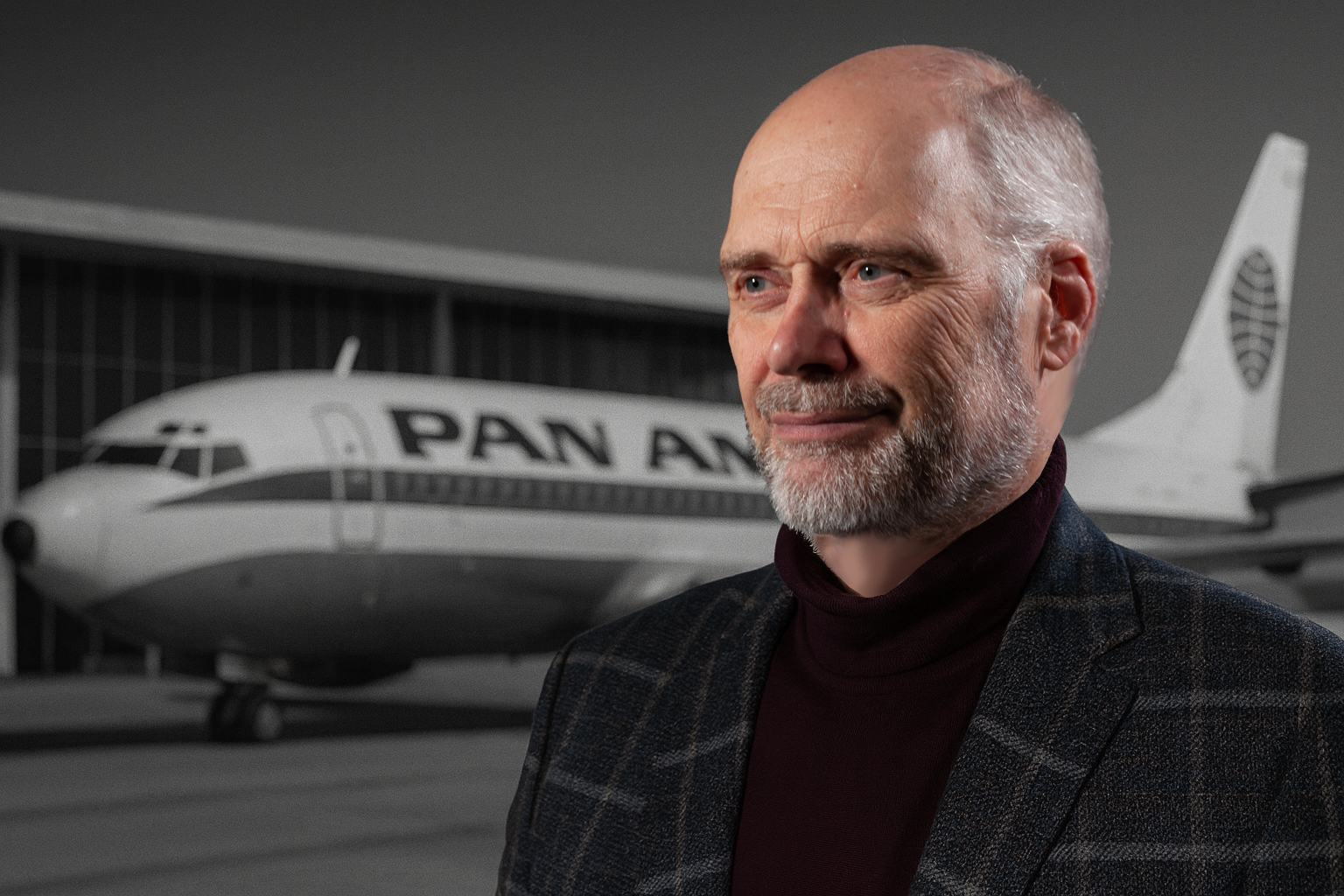
Analytical lens for aviation crises
In aviation crises, technical, operational, regulatory and human factors rarely run in a straight line. I bundle these strands into an analytical lens:
- Backward, in order to understand the true origin of the situation – from the first indications via decision paths through to reactions by authorities and political actors.
- Forward, in order to model possible developments, risks and exit scenarios – for example in relation to prosecutors, regulators, insurers, shareholders or diplomatic actors.
This gives airlines, airports, manufacturers and individuals realistic options for action – from discreet clean-up through to a consciously developed line that can also be held in public if necessary.
I describe the underlying method in detail in the Dossier Analytical Working Method.
Typical mandates in Aviation Crime & Crisis
Aviation mandates with a criminal-law dimension are often international, politically sensitive and reputation-critical. The focus is usually not on a big public trial, but on a discreet, sustainable solution.
- Cargo crime
Thefts, robbery and manipulation in the cargo area or on board – coordination of investigations and cooperation with airline security, police and the public prosecutor’s office. - Embezzlement & fraud at stations
Embezzlement, sham transactions, kickback schemes and misappropriated budgets at foreign stations. - Detained crews
Arrest or detention of crews, for example due to alleged offences in third countries – including coordination with the airline, insurers, the Foreign Office and embassies. - Security Chief Out of Control
Operational head of the airport security service turned offender; systematic misuse of airport resources. Discreet surveillance, night-time intervention by a “private tactical team”, full confession and immediate termination – all without public escalation.
- Aircraft hold / arrest of the aircraft
Aircraft that are grounded due to investigations, open claims or political tensions – the goal is a quick solution that allows all sides to save face. - Bogey Parts
Counterfeit or manipulated safety-critical aircraft parts in the spare-parts cycle; uncovering shadow supply routes and resolving the issue with minimal reputational damage. - Corruption, subsidies, sabotage
Problematic tenders, non-transparent subsidy schemes or sabotage allegations in the competition between aircraft manufacturers. - Counter-intelligence
Protection of sensitive information, clarification of leaks and advice on countermeasures – particularly in an international competitive environment.
Approach in crisis mandates
Aviation mandates in a criminal-law context – especially in crises – are rarely loud, but always delicate. They concern reputation, economic viability and often also diplomatic relations. In such constellations I effectively act as a liaison between the airline or manufacturer and state authorities – with the goal of negotiating sustainable solutions before proceedings escalate.
- Direct point of contact – clear responsibility instead of anonymous teams.
- On-site deployment – if appropriate, I travel at short notice to the relevant airport.
- Authorities and intelligence liaison – experience in working with police, customs, security services and diplomatic missions.
- Bilingual – working languages German and English; submissions, reports and negotiations in both languages.
Aviation Crime & Crisis – what this actually means
I am not a government agency, but a criminal lawyer with an aviation background. I work exclusively on the client’s side – flexible, fast and discreet. No committees, no hearings, no political stage: my clients decide what becomes known about my work and what does not.
When a crisis is underway, one simple principle applies: Do what's to do – but do it now. That means rapid situational assessment, clear priorities, direct lines to the right counterparts – and only then the question of how much of this will later appear in files, reports or press releases.
The blue globe was a promise of safety
“When I saw the Pan Am aircraft with the blue globe on its tail, I knew I was safe.”
— American evacuee from Tehran, 1979
Nearly ten years before I began working as a crisis adviser to Pan Am, this operation embodied the airline’s crisis tradition: when governmental or military means fell short, Pan Am acted.
Watch the historical film from 14:35 on YouTubeLittle Clipper – where it all began

Before I became a lawyer, I spent six years, up to 3 December 1991, working for Pan Am – among other things with the Cessna 421 “Little Clipper”. With this aircraft, I flew across Europe and as far as the Middle East and North Africa. She was a true small airliner: 375 hp, up to 300 ktas, a pressurised cabin up to FL 300 and full airliner avionics. With long-range tank we had a range of up to 2,600 km. Anti-ice, de-ice – everything was there, even a small lavatory with a seatbelt at the back. We were able to sequence Little Clipper into the arrival stream at any major airport – just like her bigger airline brothers. – How a small Pan Am Cessna 421 lived up to her big brothers.
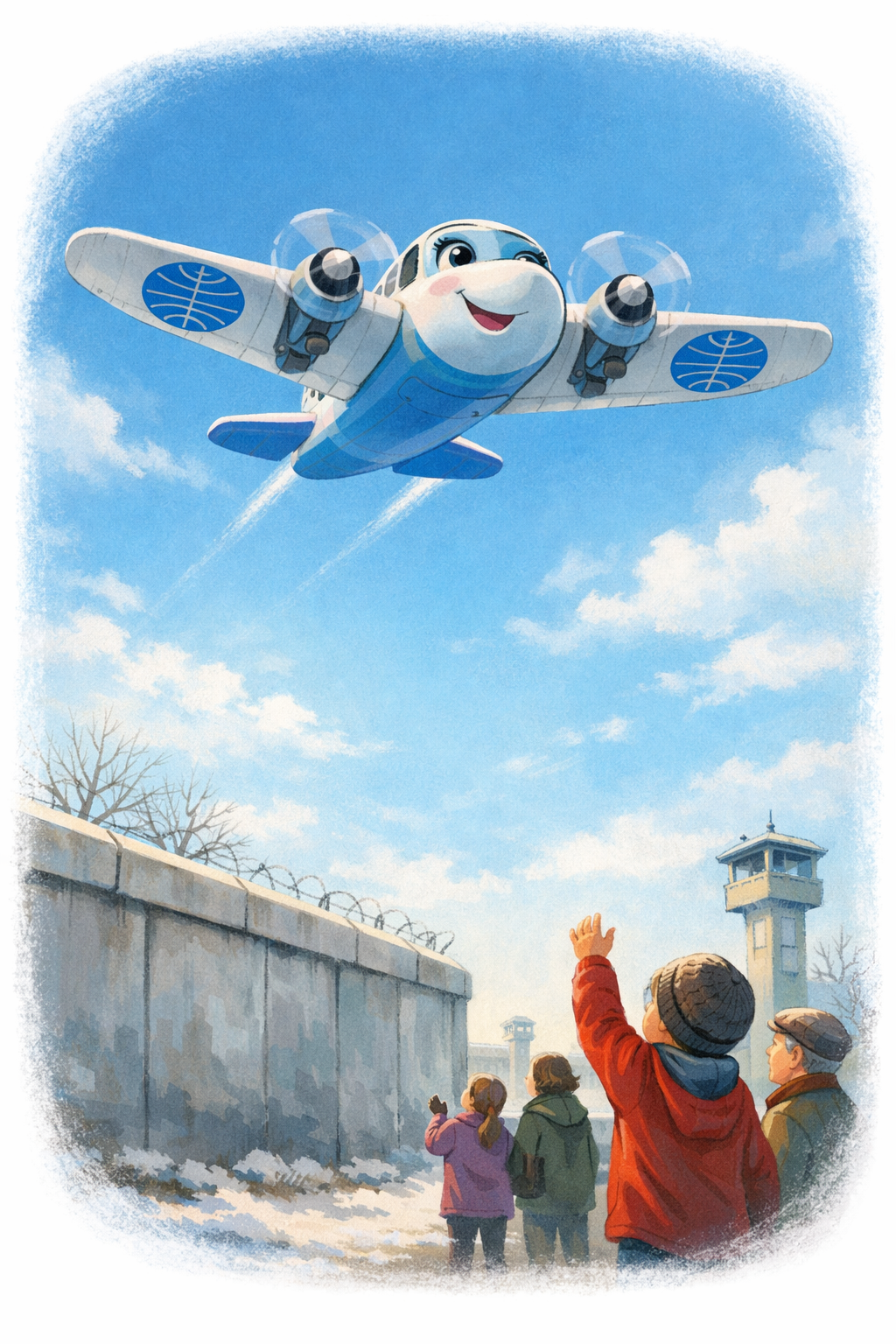
When we departed from Tempelhof (THF), then preferably on runway 09 eastbound over East Berlin. Under the wings we carried the Pan Am logo, and sometimes people in the East waved up to us, even though it was dangerous for them. We were Pan Am, we were America, we were the free world.
During that time I learned what it means to carry responsibility in aviation: decisions under pressure, complex processes on the ground and in the air, cultural differences at foreign airports – and the importance of discreet yet clear communication with authorities and security services.
Berlin Tempelhof, before the fall of the Wall in 1989.
Last Clipper – where it all ended
On 3 December 1991, a cold, clear winter’s day in Berlin-Tempelhof, I flew my last Pan Am flight – a Boeing 737 that “just needed to be taken away”. Pan Am basically no longer existed; the Berlin route rights had already gone to Lufthansa a year earlier, but this one last airplane was still sitting there and absolutely had to make it to Dresden that day – before the insolvency, anyway.
The globe on the tailplane had already faded, but it still shone in that typical Pan Am blue. My assignment was clear: get her to Dresden. Do what’s to do – but do it now. I could only find one captain who was still legally current on the 737. You don’t normally fly a 40-ton airliner “single”. But in crisis management you do not think in categories of normal operations.
So I called our aviation law expert in New York – it was three in the morning for him. Anyone who manages crises for airlines does not think in terms of day and night. Thirty minutes later the solution was clear: we would do it under FAR 91 as a special ferry / maintenance flight VFR, under visual flight rules. For that you need a fully type-rated captain – which we had. VFR with a 40-ton aircraft over Berlin? Oh hell – stress ahead – but it was legal. And we were still Pan Am, we were America.
We solved the question of the second person in the right-hand seat pragmatically: A “qualified observer / company representative” was sufficient – and that was me.
We departed from runway 09 to the east. No 70% environmental take-off – 100%, full thrust once more. Far to the east over the Schillerkiez district, then a long left turn onto a southerly course. The 737 was light, almost empty – an almost bankrupt airline can no longer fill its tanks – and she climbed with that old self-evidence that you hardly feel today.
Shortly after take-off the captain put her into a turn, no more than 25 degrees of bank. Once more over Clayallee, the former US mission. People were standing down there waving a huge US flag, the Star-Spangled Banner. A quiet farewell moment that has stayed with me to this day.
We flew over parts of the former GDR that once belonged to the ADIZ, the Air Defense Identification Zone – airspace you did not simply cross. Now we were allowed to. We were Pan Am, we were America. It was one of those quiet privileges: the freedom to fly where others had to stop.
I had never flown into Dresden with a jet before. The wind picked up on approach. I remember the ditch before the runway with its thermals – the aircraft briefly lifted, as if it wanted to resist one last time before having to settle. The captain firmly put her down on the runway. His motto: land properly once, I’m not paying landing fees twice. He had previously landed on aircraft carriers. No applause, no show – just routine that knew it was needed for the last time.
Dresden-Klotzsche. Sun on old GDR concrete, a clear December sky. We rolled out and parked the aircraft. Engines off, radios off. First the metallic crackling as she cooled down – then silence. I stayed seated for a moment. The cockpit smelled of electronics, of a life that had just gone out. In front of me the dark panel, all instruments dead. I took a deep breath and reached for my Halliburton flight case with the sticker “Pan Am, Martin Heynert, CTS”. I still have it today.
Then I walked down the stairs, turned around once more and looked at the blue globe in the sunlight. Pan American World Airways, Pan Am. Two words that carried an entire era – and for me were the best years of my life.
Excerpt from “Clipper Tales” – stories of an airline crisis manager.
This is also how I work today in criminal and crisis mandates for aviation companies: unconventional, but legally sound, without loss of time and with a clear focus on a sustainable solution for my clients. I know authorities, rules and responsibilities – but I do not think in forms, I think in options for action.
Contact for aviation mandates
If you have criminal-law questions or an acute crisis situation in the aviation sector, I am available for a confidential initial consultation – at short notice if required.
Contact:
E-mail: martin@heynert.com
Phone: Office +49.391.5982-243, Mobile +49.171.4135269